You may recall Søren Kierkegaard writing as his “second-self”
Anti-Climacus in the existential study, The
Sickness unto Death. Anti-Climacus, as we understand him, characterizes the
fundamental nature of despair as “unaware of being despair,” and hence, the
despairing individual doesn’t recognize the gravity of his illness. While
Anti-Climacus referred to the self, and the self’s relation to faith, we might
broaden this example. The “self” could be the “institution,” or even more
broadly, the “academy.” If the academy cannot perceive its own despair, then
surely, according to Anti-Climacus, the academy is tragically, gravely unwell. And
yet, it’s not a matter of the academy simply repairing itself by “penetrating
to some (facile) target of assessment,” no, the academy appears to be entrenched
in perpetuating its own despair. Perhaps it enjoys despair.
We like the name “Anti-Climacus.” If there were a similar,
pseudonymous counterpart in higher education, it might be “Anti-Vost,” the second-self
of the Provost. Let’s imagine the Anti-Vost arriving for work at Fictional U. with his satchel,
which contains 1 (one) cigar-pinching device. The Anti-Vost removes his
cigar-pinching device from his satchel. “Heh heh heh,” he says. The Provost’s
office is across the hallway. The Provost stands at his adjustable desk, he
sits at his desk, he stands at his adjustable desk. He tosses a furtive glance
across the hallway, into the office of the Anti-Vost, even though he can’t make
eye contact with the fellow who’s been engaged to supervise the faculty. But
the Anti-Vost has decided that he can’t supervise the faculty. Nobody can. Why
should he attempt the impossible? He crosses his ankles atop his desk. “I shall
hire an Associate Dean of the Supervision,” he concludes. “That is the path
forward.” He wonders whether he should wear a pince nez, or were he regal, a
prince nez. In the end, he pinches a cigar with his pinching device. The day’s
work is done.
Detail from the manuscript of The Sickness unto Death
We turn to our panel of
experts, The Machine, Sausages, and Fluffy, which is advising this blog during Complaint
Week 2019: “Doves,” says Fluffy.
“You must therefore be content to slubber the gloss…,” says
Sausages.
“Everybody is overreaching and underprepared,” writes The
Machine. “How many professionals are actually professional?”
Thank you, gentlemen. We
concur. (About what, we have no idea, but we concur.) Incidentally, I just read
a job posting from a private North Carolina university, who are hiring an Executive Director of the BB&T Center
for the Study of Capitalism. Let me get this straight. A corporate university
is hiring a corporate executive to oversee the study of corporate behavior at a
center sponsored by a large corporation.
“Well,
I’ll be a fleabag at a butt-sniffing contest.”
“Roight.”
Meanwhile,
there is urgency in opportunity gap. There is urgency in campus malaise. There
is urgency in poor graduation rates. There is urgency in equity gap. There is
urgency in plummeting enrollment. There is urgency in student debt. There is
urgency in student homelessness. We could say urgency or we could say despair.
The Anti-Vost walks past Anti-Climacus in the rain-dark evening, the latter clad in
rain-soaked rags begging for nickels and dimes. Complaint!
blood
and gutstein complaint week 2019: no solutions—just gripes
It’s 2001. The jazz pianist Tommy Flanagan has passed away. A
radio station is interviewing a friend of his. He tells a story. In the story,
it’s NYC 1950s or 1960s.
“We
was all playing gigs,” he says. “All the piano players.
“At
clubs around town, and when we was done, we’d go to the after-hours club.
“This
is where the REAL music would happen.
“There
was twenty or thirty of us.
“Each
guy got his turn at the piano.
“This
kid went up there, young kid, his hands was like birds on the piano keys.
“He
played boogie woogie, stride, modern, barrelhouse, avant GARDE.
“Man,
the place was going wild, everybody hollerin’, jumpin’, clappin’ they hands.
“Then
it was Tommy’s turn.
“Tommy
went up there.
“He
looked out at the audience, all severely you see:
“He
played the darkest, deepest key on that piano.
“Everybody
got damn quiet damn quickly.
“Man,
he wiped that cat out with ONE NOTE.”
Where is the Tommy Flanagan of today’s Democratic presidential
candidates? Where is the Democratic challenger for the presidency who can wipe
that cat out with one note? By “cat” we mean Trump, and by “cat” we mean the twenty or thirty hopefuls who are gathered at the “after hours club” also known as the
Democratic National Committee, tossing their fedoras into the ring.
Collectively, they are same-y, corporate, ageing, visionless, limpid, smarmy, air-brushed,
elitist, tight-assed, and doomed. If your favorite isn’t exactly every one of
those, then she or he is some of those. They open their mouths and “Trumpelstiltskin”
comes out. We get it. Trump is a Russian asset. He has fornicated with Triple X
stars, he has eaten a shocking amount of McDonalds, he has produced single-year
tax returns that exceed the career published output of Joyce Carol Oates. Hasn’t
this horror story—a cinema known as Trump v. Hillarious—played out before our
very eyes, with the “basket of deplorables” triumphing in the Electoral
College? Oh, this gang is very Photo Genie. They can run an impressive mile.
(They have massive quadriceps.) The best of them will turn eighty in office,
should he survive the process. (Should he achieve election.) Whereas the most
enviable politician in the country—I speak of Alexandria—is seven years too
young to establish an exploratory committee.
The great Tommy Flanagan at the piano.
We turn to our panel of experts, The Machine, Sausages, and
Fluffy, which is advising this blog during Complaint Week 2019.
“Everybody is so outraged about every little thing,” writes
Sausages, “that they don’t exhibit proper outrage when something truly
outrageous happens.”
“We live in a country,” writes The Machine, “where elections
are non-stop.”
Indeed. The Democratic group struggles to gain traction
versus Trump. Outrageousness doesn’t lift any eyebrows. And the election to challenge
Trump has been going on since December 2016, blah de bloo, blah de bloo. We
need a candidate who can wipe this—entire scourge—out of the public
domain—forever. With one note. How about Likability + Vision? Maybe that’s two
notes, or maybe this clean candidate will be (shockingly? tragically?) a
Republican? Complaint!
blood
and gutstein complaint week 2019: no solutions—just gripes
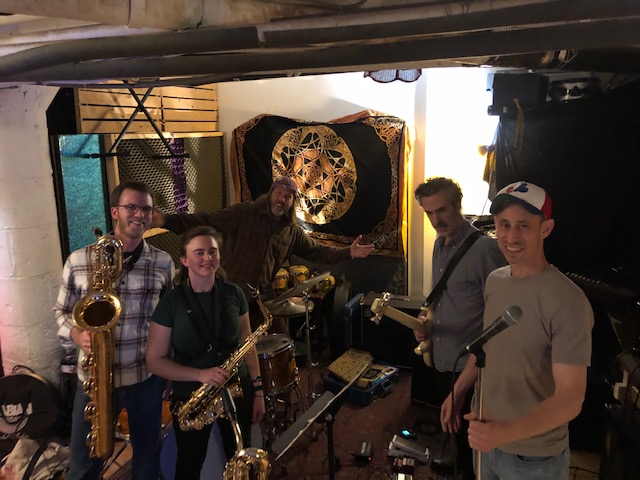
Somewhere in the (recent) tumultuous moments of my life — ". . . waiting for / the catastrophe of my personality / to seem beautiful again. . ." (Frank O'Hara) — I received an embassy from John Paul Carillo. May you be so fortunate as to receive an embassy from John Paul Carillo. He came calling as a representative of his band, Joy on Fire. Scant weeks earlier, I had witnessed Joy on Fire batter two buildings to pulp: An die Musik and The Crown, both in Baltimore. I have written about this experience. What else can I say but when you hear the thing you've always wanted to hear, two outcomes are possible. The first is: nothing further transpires (but you have the memories!) The second is: you're invited to write lyrics — and deliver them. Meet You at the Jazz Corner of the World is a two-volume live album recorded by the Jazz Messengers and their leader, Art Blakey, in 1960. The sets are phat, and this version of the Messengers that graced the New York jazz club Birdland — Blakey, Morgan, Shorter, Timmons, Merritt — was perhaps the finest in that band's storied history. I love the title of those volumes. And Joy on Fire would describe themselves, in part, as jazz. Noisy, counter-punching, and full of late-day sunlight, the band is also punk, metal, and alternative. In comparison to a musician like Wayne Shorter, Anna Meadors has thoroughly established her tone on the bari and alto saxophones. Chris Olsen, drums and percussion, rattles the buildings across the street. And John shreds his bass guitar strings — bass guitar — as if he were Duane Eddy playing the Sex Pistols songbook. In the song, "Fizzy," Sleaford Mods front-man Jason Williamson howls, "I fuckin' hate rockers / Fuck your rocker shit / Fuck your progressive side, sleeve of tattoos / Oompa Loompa blow me down with a feather / Cloak and dagger bollocks!" I think I can speak for the others when I say that we admire those blokes and that sentiment. I say "we" because together, we are recording works that will become an album (hopefully albums) and I will be appearing with the gang on a mini-tour that begins December 14th at Mooselab in DUMBO, Brooklyn. On December 21st, we'll be at Champ's in Trenton, and on December 22nd, we'll be at Rhizome in D.C. Therefore, I will see you at the Joy on Fire Corner of the World. Come join us.
Suddenly, the future is Jazz Punk. Hoy hoy!
References: "Mayakovsky" by Frank O'Hara, from his collection Meditations in an Emergency (Grove / Atlantic 1957). Meet You at the Jazz Corner of the World, Vols. 1 and 2 by Art Blakey and the Jazz Messengers (Blue Note, 1960). "Fizzy" by Sleaford Mods off their album Austerity Dogs (Harbinger Sound, 2013).
“No one will believe that I like country music,” writes
James Alan McPherson, in the first sentence of his Pulitzer-winning short story
collection, Elbow Room. Who is ‘no
one?’ we might wonder. The speaker’s wife, Gloria, can endorse blues and bebop
but not “hillbilly stuff.” The speaker, an African American man, establishes his
fondness for the stringed sounds of banjos and fiddles. “But most of all,” he reveals,
“(I) like square dancing — the interplay between fiddle and caller, the
stomping, the swishing of dresses, the strutting, the proud turnings, the
laughter.” The title of the story, “Why I Like Country Music,” prepares the
reader for a defense, a quiet rebuke ostensibly aimed at the speaker’s wife.
The story travels to the South Carolina of the unnamed
fellow’s childhood, an infatuation with “a pretty, chocolate brown”
fourth-grader named Gweneth Lawson. Even as his rival Leon Pugh threatens to
monopolize Gweneth’s attention, the speaker triumphs by dancing with the girl
at the best moment, at a school-wide square dance in celebration of spring. Yet
the ‘no one’ might include a larger swath of skeptics. Surely, square dancing must
be the province of Appalachian whites. Upon witnessing the celebration by the Black
schoolchildren, the fictional superintendent of schools states, “Lord, y’all
square dance so good it makes me plumb ashamed us white folks ain’t takin’
better care of our art stuff.”
That statement may not signal an attempt, by the superintendent,
to gerrymander the estimable history of the square dance. To the contrary, it implies
that both groups—Blacks and whites alike—had been performing the dance for
quite some time. According to scholar Philip Jamison, enslaved Black fiddlers
played music at white dances in the late 1600s, and throughout the tens of
decades of their servitude. In an article published in The Journal of Appalachian Studies, Jamison describes the arrival
of European dances and dance figures—allemande, quadrille, dos-a-dos, cotillion,
promenade, and others—in the early years of the fledgling republic. Enslaved people
not only served as musicians for these dances, but began to dance these steps
themselves, alongside their own traditions. Jamison writes that cotillions,
quadrilles, the Virginia Reel, and African dances “co-existed at plantation ‘frolics’
during the first half of the nineteenth century.” Many were performed in “squares.”
The Bog Trotters
Band, photographed in Galax, Virginia in 1937 (Unknown
photographer,
courtesy of Lomax Collection at the U.S. Library of Congress).
The Mississippi ex-slave narrative of Isaac Stier not only
chronicled that men on his plantation “clogged and pigeoned,” but called the
dances as well. Stier recalled that “I use to call out de figgers: ‘Ladies,
sasshay, Gents to de lef’, now all swing.’ Ever’body lak my calls an’ de
dancers sho’ moved smooth an’ pretty. Long after de war was over de white folks
would ‘gage me to come ‘roun’ wid de band an’ call de figgers at all de big
dances. Dey always paid me well.” Referring to the callers of square dances, Jamison,
in his article, asserts that the first callers were African American and that
dance calling was common in black culture before it was adopted by whites and
became an integral part of the Appalachian dance tradition. Perhaps it followed
naturally from the call-and-response convention of African drum music, with the
response, in this case, being the dance steps themselves.
According to a variety of sources,
including Jamison, JStor Daily, and Smithsonian.com, the standard imagery of
white farmers engaging in country or “contra” dances, reels, and other social jamborees,
doesn’t often credit African American and even Native American musicians, who,
collectively, played banjo, fiddle, bass, and bugle, and struck the tambourine
with “terrible energy” while “crying out the figures.” Numerous historical accounts
situate African American enslaved people as well as free African American musicians
calling or “prompting” square dances in the pre-war South and Southern Appalachian
regions, yet other accounts situate similar events in the Great Lakes, New
England, Canada, and England. Eventually, white musicians adopted square dance
calling, which included instructions to the dancers and an element of
improvisation. The “caller,” once a fiddler himself, eventually became an emcee
without instrumental duties, one who would explain the movements to the
dancers.
Even as recording technology developed in the early twentieth century,
few traditional African American square dance callers dedicated versions of
their craft to cylinder or vinyl. Some recorded examples of square dance calls,
however, can be found. Father and son duo, Andrew and Jim Baxter, recorded “Georgia
Stomp” on the Victor label in 1929. Andrew (father, fiddle) and Jim (son,
guitar, vocals) notably performed with a white band, The Yellow Hammers, in
1927, which represents one of the first examples of integrated recordings in
Georgia. Another musician, Henry Thomas—featuring “voice, whistle, and guitar”—recorded
“The Fox and the Hounds” on Vocalion in 1927. Samuel Jones, also known as Stove
Pipe No. 1, and billed as “one man band with singing,” recorded “Turkey in the
Straw,” on the Columbia label in 1924. Pete Harris, one of the so-called “Black
Texicans,” recorded “Square Dance Calls (Little Liza Jane)” in 1934, a tune
that was collected by folklorist John Lomax. [Nota bene: There’s America’s
favorite poor gal, Liza Jane, once again; please note the publication of my book Poor Gal: The Cultural History of Little Liza Jane, which does include some square dance content.]
“Ho didy ho / Your
baby just come from Kokomo.”
Other Black recording artists
carried notable square dance recordings into the mid-twentieth century. Look
for Long John Hunter’s “Old Rattler” on Yucca (1961) or Magic Sam’s “Square
Dance Rock, Part 2” on Chief (1960). Above, you can listen to Buddy Lucas’ “Ho
Didy Ho,” which appeared on Savoy in 1956. Lucas played tenor saxophone and
harmonica throughout his career. In addition to leading some memorable sessions
of his own, he turns up as sideman on quite a few stellar tracks and albums: Little
Willie John’s “Fever” (1956), Nina Simone
Sings the Blues (1967), Albert Ayler’s New
Grass (1968), The Blue Yusef Lateef
(1968), and Count Basie’s Afrique
(1971).
Many years before McPherson published his story, “Why I Like
Country Music,” the great Ray Charles released his crossover album, Modern Sounds in Country and Western Music
(1962). Charles, a celebrated African American pianist and singer, reinvented
twelve tunes typically associated with country artists, including “Hey Good
Lookin’” by Hank Williams. By then, perhaps, Charles had taken hold of a style
that had been influenced by both African American and white communities, maybe
more than once. It’s worth remembering that much American folklore and
mythology is precisely that—American, with far-ranging influences drawn from
numerous quarters. In an era when America is noteworthy for its divisions, we
ought to remember that call and response has influenced hillbilly tunes, and so
forth. In “Why I Like Country Music,” the schoolteacher, Mrs. Boswell, attempts
to deconstruct the aversion that the speaker initially professes, with respect to
square dancing. “The worse you are at dancing,” she says, “the better you can
square dance.” Representatives from each culture will blame the other for this
sentiment. Either way, the record player croons, “When you get to your partner
pass her by / And pick up the next girl on the sly.”
Howard University students square dancing in 1949 (Smithsonian Institution)